Interview with Roland Salesse

Hello Roland Salesse
You are an agricultural engineer and hold a PhD in science. You specialise in molecular and cellular biology and are a former director of the Laboratory of Olfactory Neurobiology at the INRAE centre in Jouy-en-Josas. You have written four books published by Quae. Your books highlight the role of the sense of smell and also of taste.
Could you briefly remind us why the sense of smell is so fundamental in the life of a baby, and later in that of an adult?
Even if we don’t pay much attention to it, we smell just as we breathe. At every moment, our sense of smell provides us with information about our environment, those around us and our food.
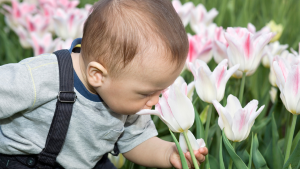
Even before birth, a baby learns in the womb the scent of its mother (which it will never forget throughout its life) and certain aromas from the food she eats. At birth, its nose will help it find the breast to feed from. And they will learn the other smells of the family and the home and, in particular, the smells of food. If the family’s diet is healthy and varied, they will benefit from developing good food preferences that will keep them in good health.
This is because what we commonly call ‘taste’ is largely a matter of smell. Try this simple experiment. Pinch your nose and, whilst doing so, take a bite (for example) of a square of chocolate. You may taste the sweetness and feel the texture, but ‘it has no taste!’. Then unpinched your nose and notice the difference: ‘it tastes of something!’. Humans may be the only species to exhibit this phenomenon of retro-olfaction: odours released in the mouth travel up through the back of the throat to the nose, where they are detected as if they were coming through the nostrils! This may also be the source of our culinary pleasures. In any case, for a young child, eating is a multi-sensory learning experience that goes far beyond mere perception in the mouth.
Another aspect of the sense of smell is that, in order to appreciate a scent, one must develop one’s attention, concentration and memory; all qualities that promote learning.
Furthermore, the development of the sense of smell contributes to young children’s multisensory explorations. At birth, vision is not yet fully developed, so babies rely on the senses that work best: touch, smell, taste and hearing. In recent studies, researchers have shown that the presence of the mother’s scent enhances toddlers’ recognition of her face.
In the first few months after birth, babies particularly favour oral exploration, using the high tactile sensitivity of their lips and tongue, which is inevitably linked to the sense of smell, as the objects being explored are right under their noses. As their vision becomes more acute, it will take precedence, but these early learning experiences will not be forgotten, even if they remain buried in the memory. However, we often find that memories can be reawakened simply by smelling scents that remind us of the past.
I understand that the sense of smell plays a part in everyday life, but also that it is used to detect diseases. Could you tell us more about this?
In the past, for want of anything better, people used their senses to make a medical diagnosis. But since then, we have developed sophisticated techniques and impressive machines to identify diseases. So much so that we have forgotten that we can quite simply use our noses.
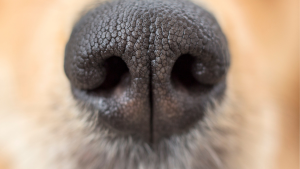
Yet, in recent years, the media have reported on the accurate detection of breast cancer by dogs at the Curie Institute. There has also been talk of Joy Milne, a British woman who detected her husband’s Parkinson’s disease at a very early stage simply by noticing a change in his body odour. But the results of research into olfactory diagnosis now go much further. It is possible to detect, in a non-invasive and cost-effective manner, odour profiles in patients’ breath that are characteristic of a wide range of diseases: cancers, inflammatory diseases, infectious diseases and neurological disorders.
These findings still need to be translated into clinical practice and teaching, as olfactory diagnosis is largely overlooked in medical studies. It is, to some extent, a cultural issue that deserves the full attention of decision-makers.
What experiments have been carried out, and what were the results?
In a study spanning five different countries (and therefore with different dietary and cultural habits), an international team was able to diagnose 17 different diseases simply by analysing patients’ breath using electronic noses. Furthermore, the diagnostic accuracy was 86 per cent, a performance at least on a par with conventional diagnostic methods. Since then, researchers have developed similar techniques for detecting biomarkers of various diseases in biological fluids: urine, blood, saliva and cerebrospinal fluid.
This is a significant breakthrough as it enables, at very low cost, preventive care through the detection of early disease markers, as well as the monitoring of patients’ recovery. Furthermore, these devices have potential applications in telemedicine, as electronic noses could soon resemble plug-ins that one would connect to a mobile phone: one simply breathes into it and the result is sent to the doctor. Furthermore, from the perspective of the National Health Service budget, these rapid and inexpensive methods could significantly reduce treatment costs.
Can this non-invasive method of disease detection using electronic noses be used on babies?
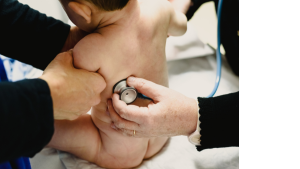
Given their safety, these methods could easily be applied to babies for the early detection of potential developmental disorders or for the prevention of childhood illnesses. This means that certain treatments could be initiated at a very early stage, thereby increasing the chances of recovery.
Thank you, Rolland Salesse, for sharing your insights on the importance of the sense of smell from a very young age.