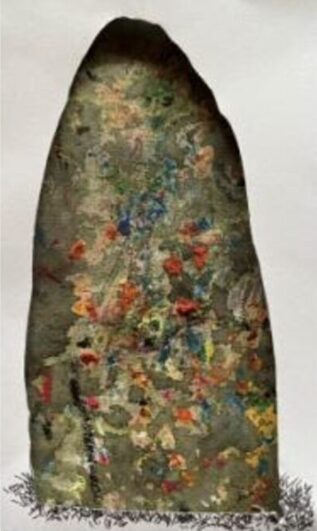
“From Pebbles to Megaliths” project
First prize in the 2025 educational initiative by the 5 Senses for Kids Foundation.
Project and context
The “From Pebbles to Megaliths” project is being carried out in a nursery school class in Morbihan.
Its aim is to raise young pupils’ awareness of their local heritage, which dates back more than 7,000 years, by developing a sensitive, multi-sensory approach that promotes knowledge.
I am part of a group of teachers engaged in action research that brings together the perspectives of departmental educational advisers and National Education inspectors, in connection with the application for the Carnac Megaliths and the Morbihan coastline to be listed as a UNESCO World Heritage Site. Our research and sessions will be used to develop educational and teaching ideas with a view to creating resources that are accessible at departmental and even academic level.
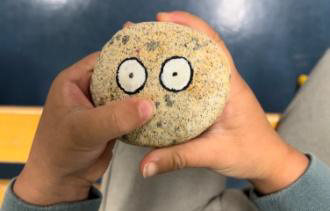
The experiment ended with Cycle 1, as these concepts seemed too complex to tackle with younger children. To introduce my young pupils to Neolithic megalithism, I needed to create a horizon of expectation to capture their interest. The approach, based on very touching albums about stones, was very motivating. The adoption of a stone by each of my pupils ultimately cemented this enthusiasm.
Project objectives for pupils
– To understand artistic and cultural forms by placing their approach in time and space. – To educate their eyes by exploring their immediate cultural environment.
– To raise awareness of the creative processes behind plastic and architectural works.
– To better understand the world around us.
– Become sensitive to the vulnerability of heritage and aware of the importance of its preservation.
– Get involved in a shared sensory experience to build an initial artistic culture
artistic culture.
My projects are meaningful, each time taking a sensitive approach to help my students become responsible citizens of tomorrow who have developed a social and ecological conscience.
Motivate
Motivate – Train the eye – Question – Gradually understand
By offering multiple approaches:
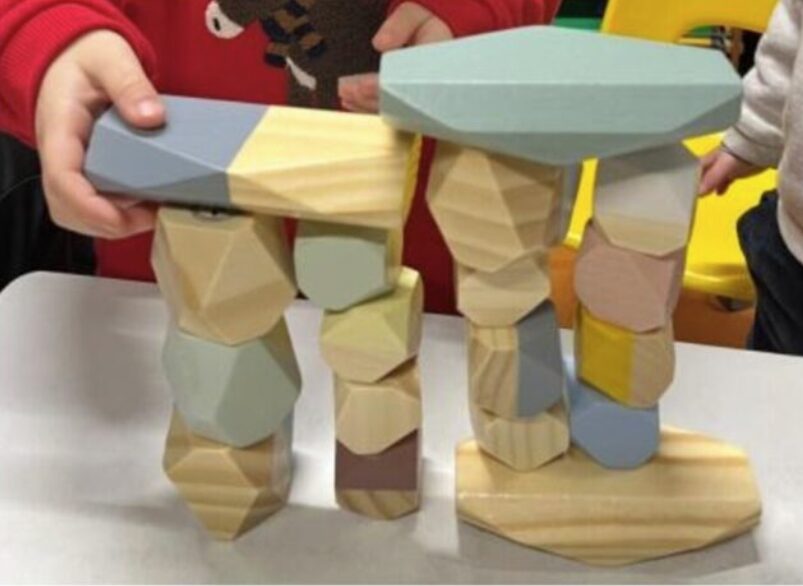
– Stand-alone sessions to explore touch, engraving, polishing, the work of archaeologists… to practise building, transporting…
– Discovering places in situ.
– Networking albums.
– Developing one’s imagination…
A multidisciplinary project
Encountering local heritage is an integral part of arts and cultural education, but also of many other areas of learning. This educational project is also built around skills to be acquired in language, temporal and spatial structuring, discovery of living things, etc. Assessment, whether daily, occasional or summative at the end of the sequence, allows us to report on the construction of knowledge.
My ambition is to enable my pupils to forge an emotional bond with this magnificent heritage so that they can become ‘ambassadors’ for their local heritage. It is essential to give them the opportunity to reinvest in it.
After a visit, an activity or a special workshop, the notes they make in their life notebook are part of the learning process.
It can also be an assessment in the sense that the children explain what they have experienced, express their feelings and share what they have learned in the form of a dictation to an adult. Feedback from parents is very important and motivating. Learning and living together, progressing, exercising curiosity and enjoying class is the mission of the nursery school, and therefore mine too.
Calendar
We are only at the beginning, but here are the highlights of the project:
– September: Adoption of “Caillou, mon ami”
– October: Visit to the Kernours Tumulus in Le Bono.
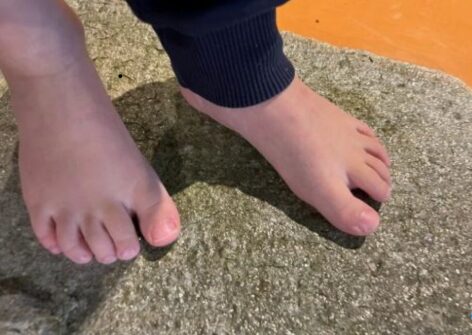
– January/February: Workshops to develop the sense of touch and ultimately introduce us to the work of archaeologists.
– March: Music project: creating a soundscape with a guest artist.
– April: Earth project with a ceramist: engraving on plates.
– May: Visit to the cairn on the island of Gavrinis.
– June: “Prehistoric Experience” activity: at the Carnac museum, followed by a storytelling tour of the alignments. – End of June: show for the school festival.
Impact of the project on the children
– What is required of the student: . showing curiosity, asking questions, expressing feelings, showing respect.
– What is required concerning in terms of knowledge: . . . identifying shapes, materials and organisations. . using specific vocabulary, remembering and discussing prehistory and the Neolithic period.
Arousing children’s curiosity about significant events with a strong sensory component is crucial to learning.
I am therefore very grateful to you for funding my project and encouraging initiatives based on the five senses.
I remain convinced that opening up to the diversity of perceptions allows everyone to develop their ability to understand the world.
To my pupils, a thousand thanks.